``

Ultrasonic cleaning: a rapidly growing industrial cleaning technology

Cleaning parts and subassemblies in industrial manufacturing requires the right tools to ensure effective cleaning. Ultrasonic cleaning is a rapidly growing technology that meets even the most stringent standards.

In this article, we will explain how this industrial cleaning process works, its advantages, and its applications.

What is ultrasonic cleaning?

Ultrasonic cleaning is an industrial cleaning process that uses ultrasonic waves to remove liquid and solid contaminants from the parts being cleaned.

Ultrasonic consists of high-frequency sound waves, with frequencies above 20,000 Hz, and is therefore inaudible to the human ear.

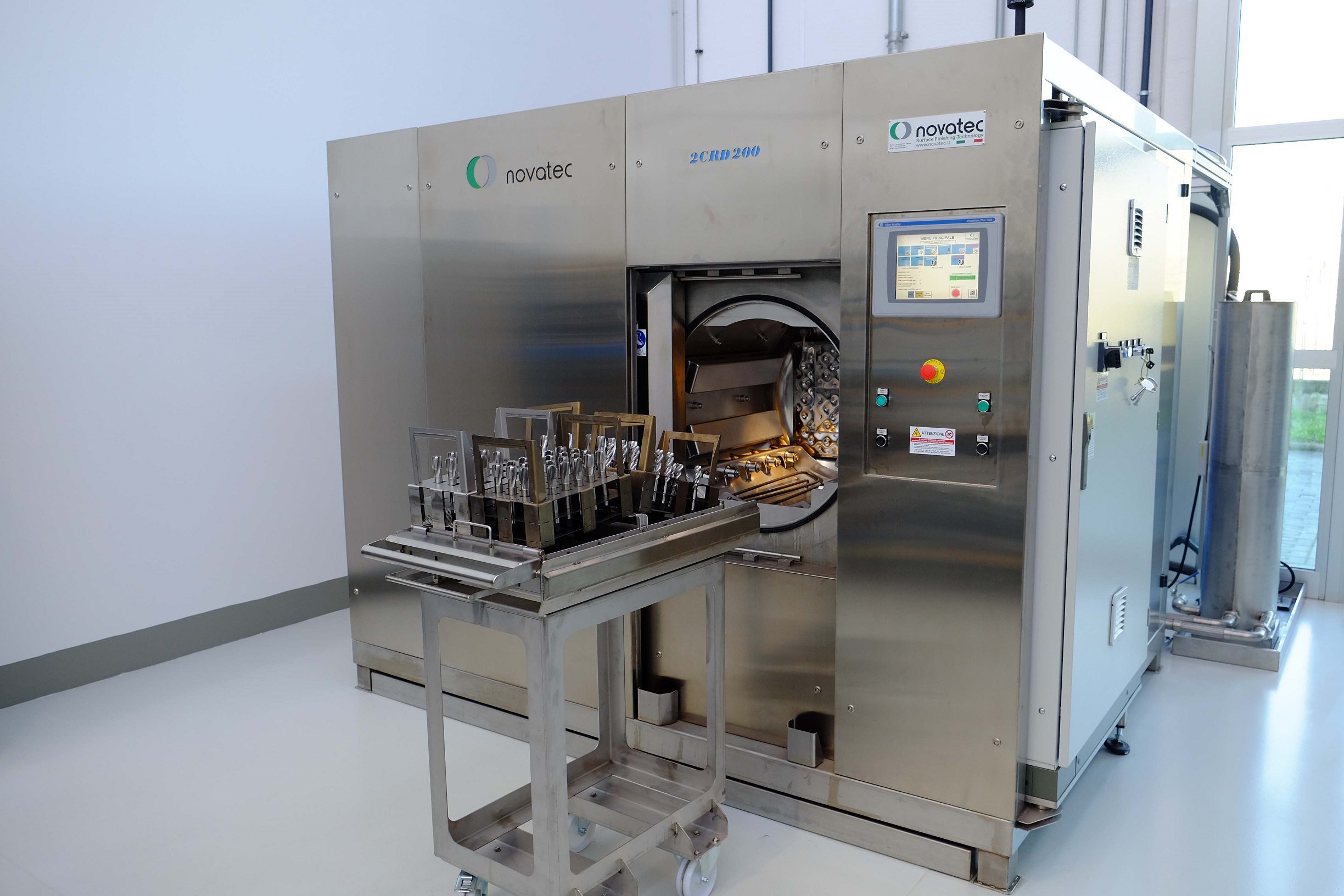
Machine de nettoyage par ultrasons pour application industrielle

How does ultrasonic cleaning work?

Ultrasonic waves are generated by piezoelectric transducers, which convert electrical energy into mechanical vibrations. These vibrations are then transmitted to a cleaning fluid (water + detergent or solvent), which generates pressure waves.

Pressure waves generate energy-rich microbubbles that travel through the liquid. When these microbubbles come into contact with the surfaces to be cleaned, they implode, releasing an amount of energy equivalent to that of mechanical brushing. This physical phenomenon is called “cavitation.”

The Benefits of Ultrasonic Cleaning

Ultrasonic cleaning is more effective than traditional cleaning methods, such as manual cleaning or water jet cleaning.

It offers many benefits:

Multi-directional cleaning

Ultrasonic waves propagate in multiple directions. This makes it possible to clean hard-to-reach areas, including pores in materials, blind holes, and surfaces with complex geometries.

This cleaning process is particularly effective at removing contaminants such as grease, oil, and polishing compounds, as well as fine particles, dust, and other contaminants.

Environmentally friendly

This cleaning process does not use solvents that are harmful to users or the environment. In most cases, it uses biodegradable cleaning solutions (water + detergent) or Class A3 fluids.

Economical

Ultrasonic cleaning helps reduce labor costs as well as the cost of consumables.

In fact, cleaning products are filtered and recycled to maximize their useful life.

Ultrasonic cleaning processes are often automated. This helps reduce costs and frees up staff to perform other tasks.

Automation also ensures that cleaning processes are consistently reproducible. It is also important to note that the ultrasonic cleaning process does not alter surface finishes in any way.

Reduced maintenance costs

Ultrasonic cleaning, which removes particulate matter from parts or subassemblies, increases the reliability and service life of equipment by eliminating contaminants that can cause malfunctions or failures.

Industrial applications

Ultrasonic cleaning is used in various advanced fields, such as:

– Automotive and automotive suppliers,

– Aerospace,

– Médical,

– Electronics,

– Optics,

– Watches and jewelry.

How does an ultrasonic cleaning tank work?

Ultrasonic tanks consist of several components, namely:

– A cleaning tank, usually made of stainless steel

– An ultrasonic generator,

– Ultrasonic transducers,

– A bath heating system,

– A cleaning basket.

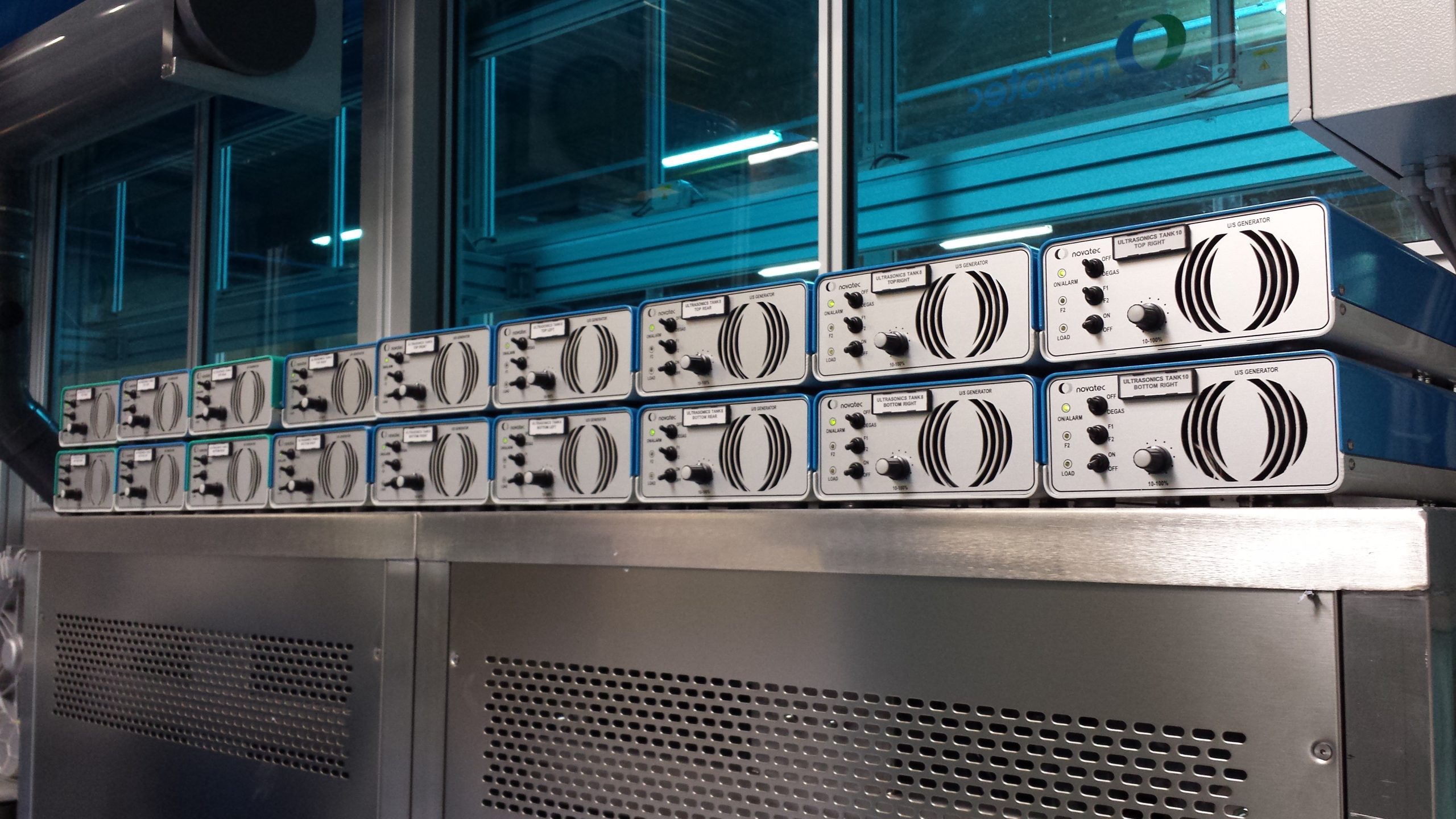
Générateur pour le nettoyage par ultrasons

Ultrasonic transducers are mounted on the bottom and/or sides of the cleaning tank. They are controlled by an ultrasonic generator. When the generator is activated, it sends a high-frequency electrical current to the transducers, which convert this signal into mechanical vibrations.

The vibrations travel through the cleaning fluid, creating pressure waves. These waves generate microbubbles that implode upon contact with the surfaces to be cleaned, releasing energy equivalent to mechanical brushing.

The factors that contribute to the effectiveness of ultrasonic cleaning are:

– Bath temperature,

– Concentration of the cleaning product,

– Contact time,

– Ultrasonic frequency and power.

How long does an ultrasonic cleaning cycle take?

Cleaning time depends on the type of parts and the amount of contaminants to be removed. However, it remains a fast and effective cleaning process. In general, the average cleaning times observed for ultrasonic cleaning of production parts range from 3 to 10 minutes.

During maintenance cleaning operations, where parts may be much more contaminated, the cleaning phases can last anywhere from 15 to 30 minutes.

Conclusion

Ultrasonic cleaning is gaining widespread adoption in industry. It offers numerous technical and economic advantages over traditional technologies. This cleaning process is highly effective, technologically advanced, reproducible, automatable, and environmentally friendly. It also improves performance and reduces costs.

If you are looking for a cleaning process for your parts and subassemblies, ultrasonic cleaning is an option worth considering. The equipment offered by Cleansonic provides manufacturers with a turnkey solution to their cleaning challenges. Our team of experienced professionals will guide you toward the optimal industrial cleaning process to meet your needs.

For more information, explore our range of ultrasonic cleaning equipment.

Demande de fiche technique

Please select a valid form

Contacter le SAV

SAV
Consentement au RGPD